


Our English Cream Golden Retriever puppies are $3,500.
A $500 non-refundable reservation fee is required to reserve your puppy. This fee is applied toward the purchase price, with the remaining balance due before your puppy goes home.
Every Puppy Goes Home With:
✓ Puppy Purchase Agreement
✓ Comprehensive Veterinary Health Examination
✓ Age-Appropriate Vaccinations & Deworming
✓ Microchip Identification
✓ Limited AKC Registration (Pet Home Only)
✓ Written Health Guarantee & Health Records
✓ Early Socialization & Enrichment
✓ Lifetime Breeder Support
Puppy Starter Pack
Your puppy will also receive:
-
Sample Pack of NuVet Plus Supplements
-
Familiar Blanket or Toy with Litter Scent
-
Puppy Care & Transition Information
-
Digital Puppy Package Including:
-
Pedigree & Lineage Information
-
Health Testing Documentation
-
Important Puppy Records
Our goal is to provide every puppy with the healthiest possible start and to support our families long after their puppy comes home.-
Health & Veterinary Care
All puppies are dewormed at 2, 4, 6, and 8 weeks of age.
At approximately 6 weeks of age, each puppy receives:
✓ Comprehensive Veterinary Health Examination
✓ First Set of Age-Appropriate Vaccinations
✓ Individual Health Assessment
If a puppy remains with us for training after their go-home date, we will continue their vaccination schedule according to our veterinarian's recommendations.
Genetic Health Guarantee
The health and well-being of our puppies is a top priority. Through careful health testing and responsible breeding practices, our puppies are guaranteed clear of the following common Golden Retriever genetic conditions:
✓ Ichthyosis (Golden Retriever Type)
✓ Degenerative Myelopathy (DM)
✓ Progressive Retinal Atrophy (PRA/PRCD)
✓ Neuronal Ceroid Lipofuscinosis 5 (NCL5)
✓ Golden Retriever Progressive Retinal Atrophy 1 (GR-PRA1)
✓ Golden Retriever Progressive Retinal Atrophy 2 (GR-PRA2)
Health testing documentation for the parents is available upon request and included in each puppy's digital puppy package.
Our Health Guarantee
We know our puppies, their parents, and the generations behind them. Through careful breeding, comprehensive health testing, and a deep understanding of our bloodlines, we are confident in the health and quality of every puppy we raise.
For added peace of mind, every puppy from Grace Ridge English Retrievers is backed by our 3-Year Health Guarantee.
Learn more about our Health Guarantee HERE.
Our Puppy Process
Welcoming a new puppy into your family is an exciting journey, and we're here to guide you every step of the way.
1. Submit a Puppy Inquiry
Complete our Puppy Inquiry Form so we can learn more about your family, lifestyle, and what you're looking for in a puppy.
2. Let's Connect
After reviewing your inquiry, we'll schedule a phone call to answer your questions, get to know you better, and ensure one of our puppies is the right fit for your family.
3. Reserve Your Spot
A $500 non-refundable reservation fee secures your place on our reservation list. Pick order is determined by the order deposits are received. If your preferred sex is unavailable, your reservation may be transferred to a future litter.
4. Puppy Selection Day
Around 5-6 weeks of age, puppy personalities begin to emerge. We'll share photos, videos, and updates to help you select the puppy that best fits your family.
5. Homecoming Day
Puppies are ready to go home at approximately 8 weeks of age. Families are welcome to pick up their puppy in Lafayette, New Jersey, or we can assist with delivery arrangements when needed.
6. Lifetime Support
Our relationship doesn't end when your puppy goes home. We're always available to answer questions, provide guidance, and celebrate milestones as your puppy grows.
Puppy Training Program
For families who would like their puppy to begin life with a strong foundation, we offer an optional 4-Week Puppy Training Program for an additional $2,500.
This program includes full boarding and individualized, hands-on training designed to help your puppy transition smoothly into their new home with confidence and structure.
Training May Include:
✓ Name Recognition
✓ Crate Training
✓ Potty Training Foundations
✓ Leash Walking
✓ Basic Commands
✓ Doorway Manners & Impulse Control
✓ Exposure to Household Noises
✓ Car & UTV Rides
✓ Stairs & New Environments
✓ Safe Public Outings
✓ Water Introduction
✓ Grooming & Bathing
✓ Veterinary Visits
✓ Socialization with Dogs & Cats
✓ Gunfire Desensitization
✓ Confidence Building & Enrichment
A Head Start for Success:
Our goal is to provide each puppy with a strong foundation of manners, confidence, and life experiences while helping create a smooth transition for both puppy and family. By the time your puppy comes home, they will already have valuable skills and experiences to build upon for years to come.

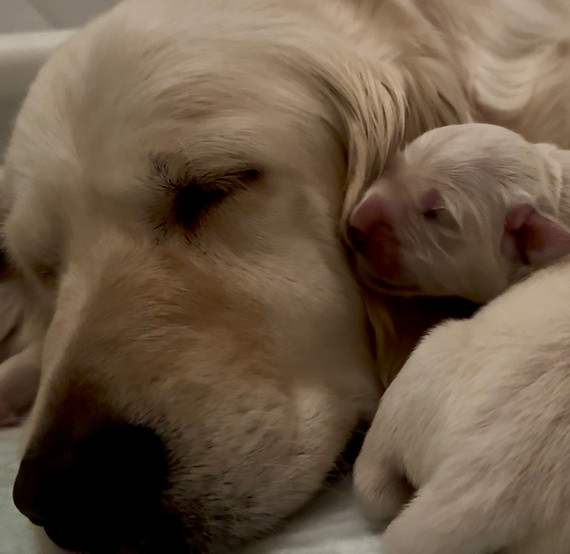


YOUR PUPS GROWTH AT A GLANCE
🐶 Puppy Developmental Stages: The Inside Scoop
Your adorable furball is about to embark on a rollercoaster of growth — full of exciting milestones and learning moments! Understanding what’s happening inside their little bodies can help you nurture them safely and effectively.
⚠️ Very Important Information
When you bring home your 8-week-old puppy, it’s important to remember just how delicate their growing bodies are. At this stage, their bones aren’t even touching yet! What looks like confident walking is actually made possible by flexible joints composed mostly of cartilage, muscle, tendons, and ligaments — all still
🐾 Puppies at 7-8 Weeks: Ready for Their Forever Homes
At around 7-8 weeks old, puppies are finally ready to leave their mother and littermates to join their new families. This is a big transition — emotionally, physically, and developmentally — and it’s the perfect time for bonding and gentle learning to begin.
🌱 Physical Development
By 8 weeks, puppies are still very much babies. Their bones, joints, and muscles are growing rapidly, but they’re not yet strong or stable. Coordination is improving, though you’ll still see wobbly runs, clumsy tumbles, and plenty of zoomies!
They need lots of rest, short bursts of playtime, and protection from high-impact activities like jumping off furniture or climbing stairs. Their immune systems are still developing, so they’re not fully protected until their vaccine series is complete.
💕 Emotional & Social Development
At this stage, puppies are curious, playful, and soaking up every experience like little sponges. They’ve learned basic dog manners from their mom and littermates — like bite inhibition and social signals — and now it’s time for you to continue teaching them what life in a loving home is all about.
This is the critical socialization period, which means it’s time to gently introduce your puppy to different people, sounds, textures, and experiences. Positive exposure now builds a confident, well-adjusted adult dog later.
🧠 Learning & Training
Puppies at 8 weeks are smart and eager to please — perfect for starting simple, fun lessons! They can begin learning their name, potty routines, and basic cues like sit or come. Training sessions should be short (just a few minutes at a time) and always positive.
Crate training, gentle handling, and consistent schedules all help your puppy feel safe and secure in their new environment.
🍗 Feeding & Care
Puppies this age should eat 3–4 small meals per day of high-quality puppy food. Always provide fresh water and maintain a consistent feeding routine to support healthy digestion and house training.
Lots of love, patience, and calm structure go a long way during these early weeks. They’re adjusting to new surroundings, new people, and a whole new life — and they’ll look to you for comfort and guidance.
🌟 An 8-week-old puppy is full of wonder, personality, and potential. This stage sets the foundation for everything ahead — from social skills to obedience and trust. With gentle care, structure, and love, you’re giving your puppy the very best start to a lifetime of companionship.